Source Manual 2 Crank Hospital Bed With All Inclusive Guardrail for Hospitals
Compare 30 manual 2 crank hospital bed with all inclusive guardrail options from China. These stainless steel medical beds feature silent castors, adjustable back-rest and leg positions, and ISO9001/CE certifications for hospital and home care use; compare the available evidence and request quotations based on your requirements.
Key considerations
Products List


Comprehensive Sourcing Guide
Manual 2 Crank Hospital Bed with All Inclusive Guardrail Sourcing Guide
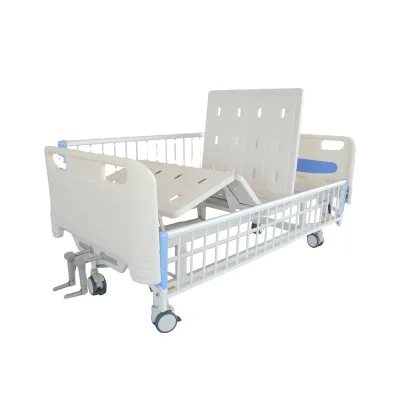
Procurement teams must first distinguish between single-function and two-function manual beds when evaluating the market for a 2-crank hospital bed with all-inclusive guardrails. The observed product data indicates that specific models, such as the B01-111-07, are explicitly classified as two-function beds capable of adjusting both the backrest and leg sections. Buyers should verify that the selected unit matches the intended clinical workflow, as some listings describe general hospital furniture while others specify distinct nursing or patient care applications.
The structural integrity of the bed frame is a primary consideration, with stainless steel and general metal types appearing in current listings. Sourcing professionals need to confirm whether the metal composition meets specific corrosion resistance requirements for the intended facility environment. Additionally, the presence of four silent medical castors is a standard feature in high-quality units, ensuring smooth mobility without disturbing patients in quiet hospital wards or home care settings.
Product Scope and Observed Listing Signals
Buyers should analyze the observed price range of 53 to 500 USD to understand the variance in product quality and feature sets. This wide spectrum suggests that lower-priced items may lack comprehensive guardrail systems or durable finishes, while higher-priced units likely include enhanced safety features and robust construction materials. It is critical to correlate the listed price with the specific model number and material specifications to avoid purchasing under-specified equipment that fails to meet clinical safety standards.
The minimum order quantity (MOQ) for these beds varies significantly, ranging from a single piece to 160 units, which impacts procurement strategy for different facility sizes. Small clinics or home care providers may benefit from suppliers offering single-item selling units, whereas large hospital networks might leverage bulk purchasing power to negotiate better terms. Understanding these MOQ thresholds helps buyers align their inventory planning with actual demand without incurring unnecessary storage costs or capital lock-up.
Technical Specifications to Verify
Verification of the mechanical adjustment range is essential for ensuring patient comfort and caregiver accessibility. The available data highlights specific lifting angles, such as a backrest range of 0 to 75 degrees and a leg-raising range of 0 to 45 degrees, which are critical for therapeutic positioning. Procurement teams must confirm that the selected model consistently delivers these exact mechanical ranges, as variations can affect patient recovery outcomes and the ease of nursing care procedures.
Dimensional accuracy and load capacity are equally vital technical parameters that require strict validation before finalizing a purchase order. Standard dimensions observed in the market include lengths around 2000 to 2050 mm and widths near 960 mm, with a height of approximately 500 mm. Furthermore, the load capacity must be verified against the specific patient demographic, with some listings indicating a capacity of 250 kg, ensuring the bed remains stable and safe under maximum weight conditions.
Compliance and Safety Documentation
Regulatory compliance is a non-negotiable aspect of sourcing medical equipment, requiring buyers to demand valid certification documents for every batch. The market data references multiple certifications, including ISO9001, ISO13485, CE, and FDA, which indicate adherence to international quality management and medical device safety standards. Buyers must request current certificates directly from the supplier to confirm that the specific model number matches the certified production line and has not been altered.
Safety features, particularly the all-inclusive guardrail system, must be validated against local hospital safety regulations and patient fall prevention protocols. While listings mention "all-inclusive guardrails," the specific design, locking mechanisms, and material strength must be inspected to ensure they prevent patient egress without causing injury. Procurement teams should also verify that the product condition is listed as new and that the warranty terms, often cited as two years, are clearly defined in the contract.
Cost Drivers and Commercial Terms
The total cost of ownership is influenced by several factors beyond the initial unit price, including customization options and packaging requirements. Suppliers offering customized logos, colors, or specific packing solutions like wooden cases versus cartons may charge premium rates that affect the overall budget. Buyers should evaluate whether these customization services provide sufficient value for their branding or logistical needs before committing to higher price points.
Commercial terms such as after-sales support and service availability play a significant role in the long-term financial viability of the procurement. Listings frequently mention 24-hour, 365-day service availability and online technical support, which are crucial for minimizing downtime in critical care environments. Procurement contracts should explicitly define the scope of these support services, including response times and the availability of spare parts, to ensure operational continuity.
Supplier Qualification and Quality Control
Supplier qualification requires a thorough review of the manufacturer's origin and production capabilities, with Hebei, China, being a noted place of origin for these units. Buyers should assess the supplier's capacity to maintain consistent quality across large production runs, especially when dealing with MOQs up to 160 units. Verifying the supplier's history with OEM and ODM services can provide insight into their flexibility and ability to meet specific customization requests.
Quality control processes must be established to ensure that every delivered unit meets the specified standards for material and finish. The use of stainless steel and the presence of silent castors are key quality indicators that should be verified through pre-shipment inspections. Buyers should implement a rigorous acceptance protocol that checks for defects in the folding mechanisms, guardrail stability, and surface finish to prevent the deployment of substandard equipment.
Long-Term Procurement Checks
Establishing a reliable supply chain requires ongoing monitoring of supplier performance and product consistency over time. Buyers should track the supplier's ability to meet lead times and maintain the quality of the 2-crank manual beds across multiple orders. Regular audits of the production facility and review of customer feedback can help identify potential issues before they impact critical hospital operations or patient care.
Future-proofing the procurement strategy involves staying informed about updates to medical device standards and evolving clinical requirements. As healthcare needs change, the specifications for hospital beds may shift, necessitating a flexible approach to vendor relationships. Procurement teams should maintain open communication channels with suppliers to ensure that the equipment remains compatible with new safety regulations and technological advancements in patient care.
FAQs
What is the load capacity of this manual hospital bed?
The bed supports a maximum load capacity of 250kg. This robust metal construction ensures stability for patient care. The stainless steel frame provides durability. It is designed for safe use in hospital environments. The 250kg limit applies to the entire structure. This capacity meets standard medical facility requirements for patient safety.
Can the bed be customized for specific hospital needs?
Yes, customization is available for this manual hospital bed. Buyers can request specific logo printing and packaging options. The product supports OEM and ODM services. Custom colors and designs can be arranged. This flexibility allows hospitals to match their branding. Contact the supplier to discuss your specific customization requirements.
What certifications does this manual hospital bed hold?
The bed holds ISO9001, CE, and ISO13485 certifications. It also meets FDA and ISOCE standards. These certifications ensure compliance with medical device regulations. The quality management systems are verified by these marks. This ensures the product meets international safety standards. Buyers can rely on these documented certifications for procurement.
How does the back-rest lifting mechanism work?
The back-rest lifts from 0 to 75 degrees using a manual crank. This two-function mechanism allows precise patient positioning. The 2-crank system controls both back and leg sections. Users can adjust angles easily without electricity. This manual operation ensures reliability in all settings. The mechanism is designed for smooth and quiet adjustment.
What is the warranty period for this medical bed?
The bed comes with a 2-year warranty. This coverage protects against manufacturing defects. The warranty applies to the metal frame and mechanisms. Buyers receive online technical support during this period. The service is available 24 hours a day. This warranty ensures long-term reliability for hospital investments.
What are the standard dimensions of this hospital bed?
The standard dimensions are approximately 2000mm in length and 960mm in width. The height is around 500mm when unfolded. These dimensions fit standard hospital room layouts. The bed provides ample space for patient care. Custom sizes may be available upon request. The compact design ensures easy maneuverability in clinical settings.